The New York Times — A Torch Bearer of Italian Tradition Brings Stability to the Met Opera
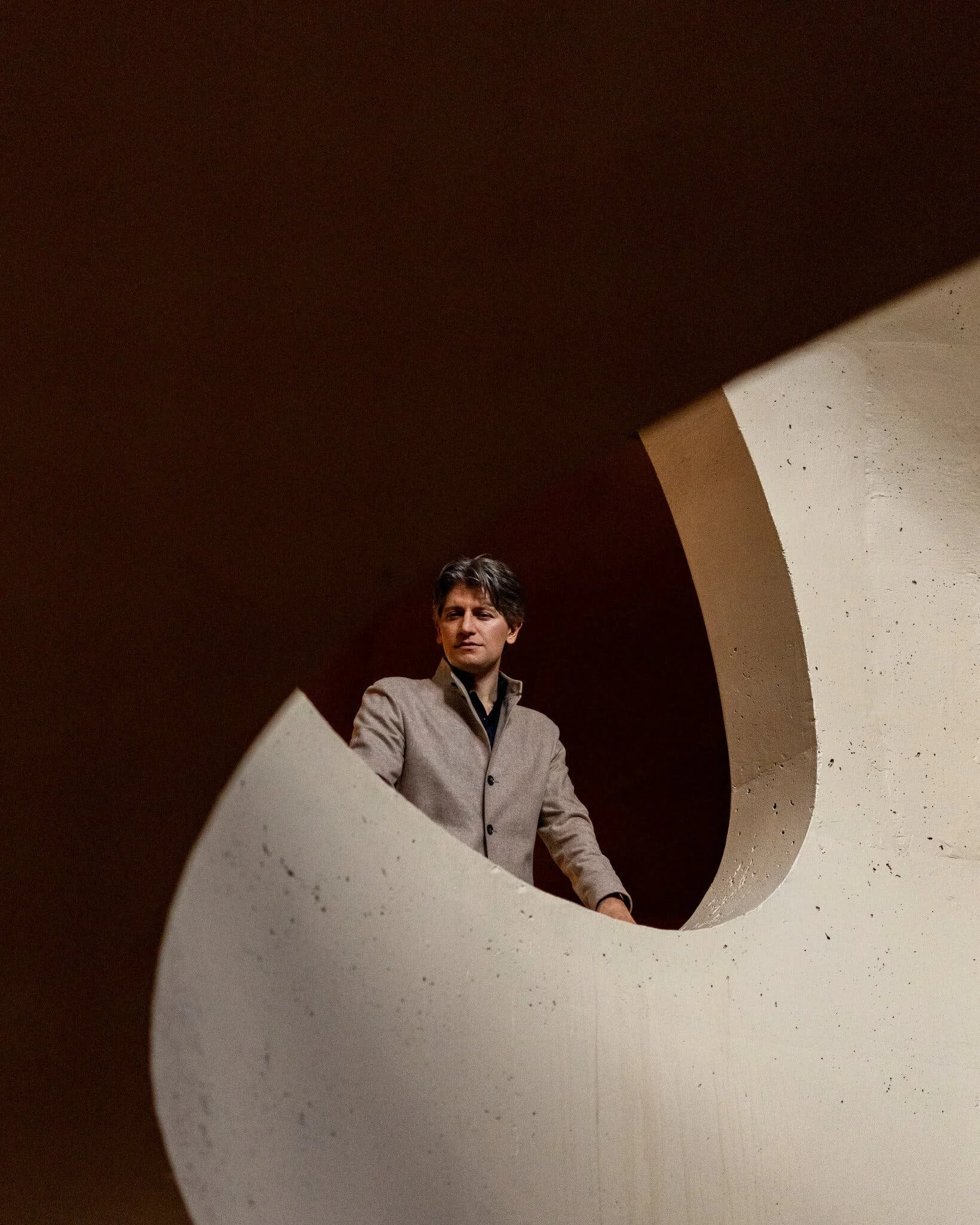
Photography by Elias Williams for The New York Times
Article by Joshua Barone from The New York Times
“Sorry, I don’t want to bore you,” the conductor Daniele Rustioni told the musicians of the Metropolitan Opera Orchestra. “But this is important.”
Rustioni, a 42-year-old northern Italian with a boyish face and strands of gray falling from the part of his brown hair, was rehearsing Giordano’s “Andrea Chénier,” and he wanted to get the mood of the opening party scene just right.
He described the ball in vivid detail, down to the nastiness of a character’s laugh. Then he focused on a direction in the score: “con eleganza,” or “with elegance.” That could mean a refined tone, but Rustioni wanted more subtext for a party on the cusp of the French Revolution. “This whole thing is superficial,” he told the musicians. “Good manners, but nothing important.”
When the orchestra played through the passage again, Rustioni smiled and gave a thumbs up before waving his hands to stop the rehearsal. “OK, caffè, caffè, caffè!” he said. It was time for a break.
These days, Rustioni is calling a lot of much-needed breaks at the Met as he juggles three productions: the revival of “Chénier,” which opens Nov. 24, as well as runs of Mozart’s “Don Giovanni” and Puccini’s “La Bohème.” He is more or less in residence this fall as he starts his new job as the company’s principal guest conductor.
Rustioni is joining the Met at a pivotal moment in his career. He recently finished his tenure as the music director of Opéra de Lyon in France and is using his newfound time to expand into symphonic conducting. A maestro of the old school, he is trying to follow the footsteps of his mentor, Riccardo Muti, and other luminaries going back to Arturo Toscanini (as well as conductors in the German tradition like Herbert von Karajan), who came up through opera houses and went on to lead some of the world’s top orchestras.
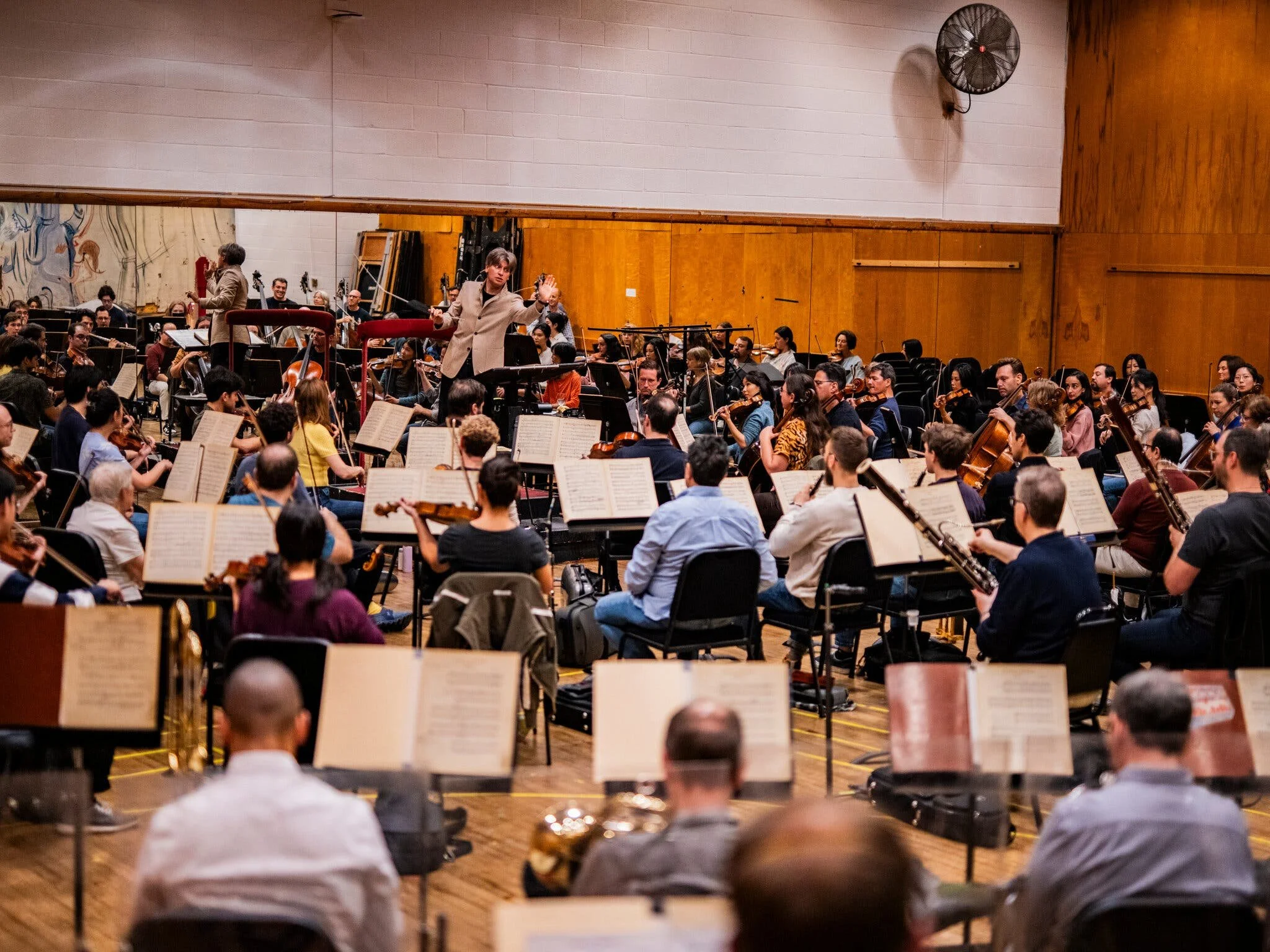
Daniele Rustioni rehearsing “Andrea Chénier” with the Met Orchestra, one of three productions he is juggling this fall.
Photography by Elias Williams for The New York Times
“There is this fantastic conducting tradition of Italians,” Rustioni said in an interview. “The world always needs someone to conduct ‘Traviata’ and ‘Rigoletto,’ but there are very few who really are able to also have a career the way Toscanini conducted the ‘Ring’ and all kinds of symphonic music. I want to honor this tradition.”
BORN IN MILAN, Rustioni had a head-spinning start in opera. His mother sang in choirs and brought him to rehearsals instead of leaving him with a nanny. By the time he was 5, he was singing, too, and a few years later he enrolled with the children’s choir at La Scala.
Choristers were required to study at what is now the Milan Conservatory, so Rustioni took up the cello and organ while performing at La Scala alongside the likes of Plácido Domingo, and under the baton of Muti. Rustioni, who was cast as one of the three boys in “The Magic Flute,” told Muti during a rehearsal that he wanted to be a conductor, too.
Muti told him to study 10 years of piano and 10 years of music composition, and then he could start to think about conducting. “I don’t know if he was making sort of a joke,” Rustioni said, “but the next day I went to mother and told her what I wanted to do.”
In an interview, Muti said that he was dead serious. “Opera conductors must be able to prepare a singer from the piano,” he added. “And if you spend four years on harmony, three years on counterpart and three years on orchestration, you get in the head of a composer. That’s important because the arms are the extension of the mind, not the show of a clown on a podium.”
Rustioni ended up with three diplomas and immediately joined La Scala, rehearsing singers, easing into conducting and working as a prompter. He quickly learned how hard some opera can be; he thought he was a great conductor until he tried bel canto.
“It was a catastrophe,” he said. “You need to deal with the emptiness on the page, and you need to deal with the fact that it seems that you are a slave of the voice. But once you master it, the sky is really the limit.”
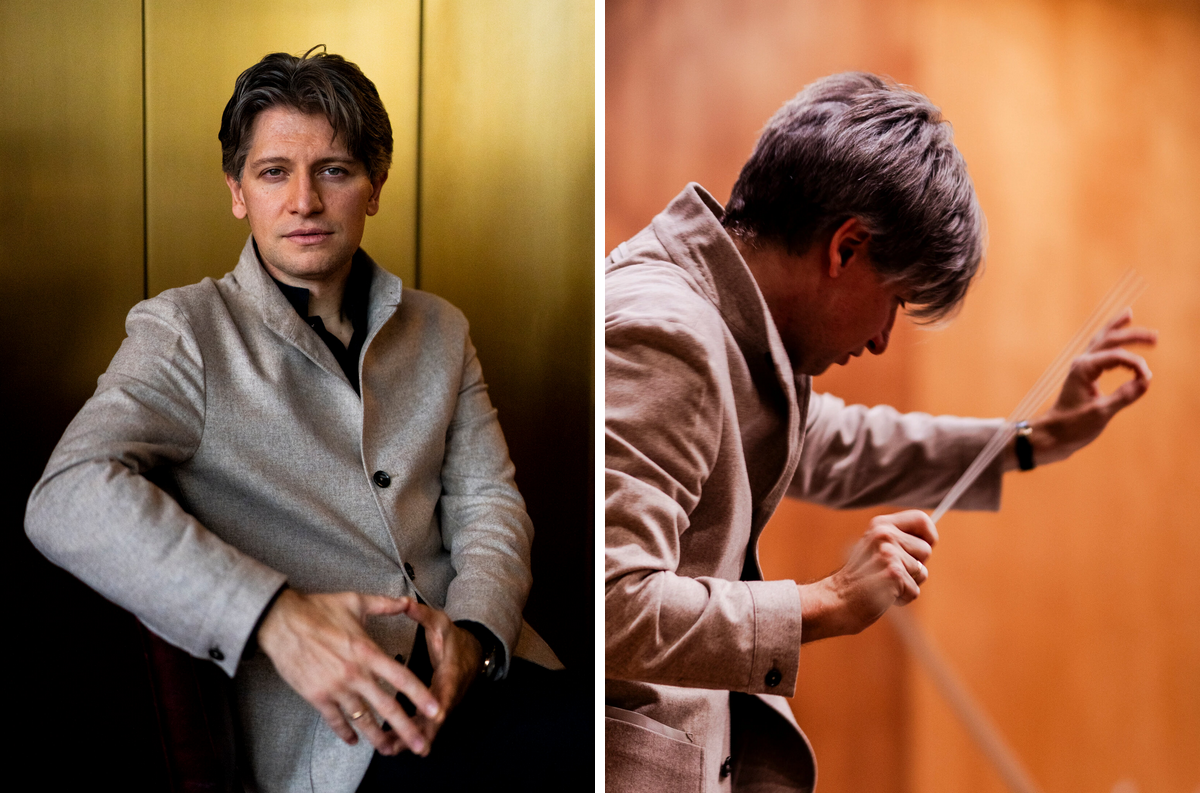
“The world always needs someone to conduct ‘Traviata’ and ‘Rigoletto,’ but there are very few who really are able to also have a career the way Toscanini conducted the ‘Ring’ and all kinds of symphonic music. I want to honor this tradition.”
Photography by Elias Williams for The New York Times
His repertoire expanded through a young artist and assistant conductor post at the Royal Opera House in London, and through jobs in St. Petersburg, Russia, and Florence, Italy, where he honed his symphonic repertoire over more than a decade with the Orchestra della Toscana.
A major development came in 2017, when Rustioni became the music director in Lyon. He was devoted to the opera house, spending six months a year at the theater, which he said is “the only way to succeed in the job.” And unlike some of his peers, he never (and still hasn’t) canceled a gig he signed up for, no matter whether another, more high-profile opportunity arose along the way. He hired many of the musicians who now play in the orchestra, and brought them to the eminent Aix-en-Provence Festival, where he continues to conduct them every summer.
The same year he started in Lyon, Rustioni made his Met debut with Verdi’s “Aida.” Peter Gelb, the company’s general manager, recognized him as “a born conductor” with a strong musical personality and …