Be Our Guest
Article by Jay Goodwin from Metropolitan Opera
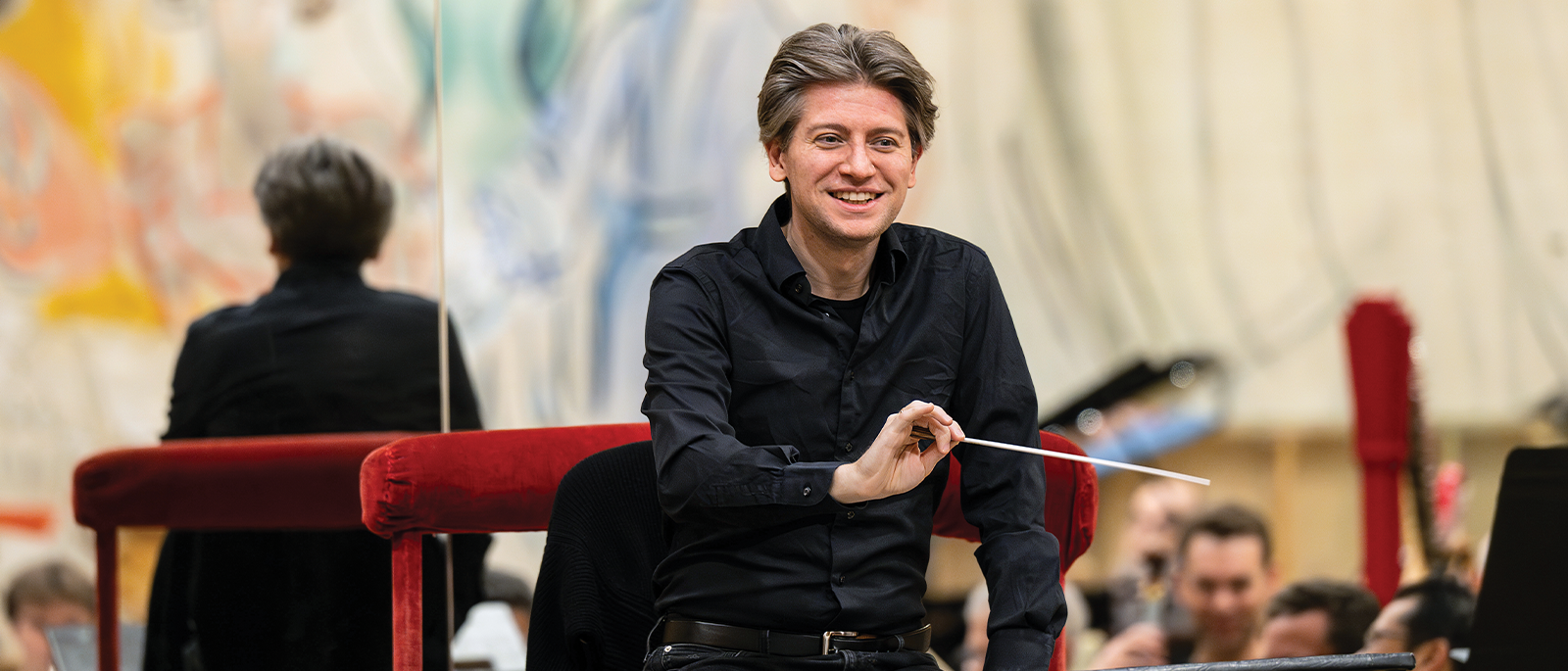
This season, Maestro Daniele Rustioni begins his tenure as the Met’s Principal Guest Conductor, taking the podium for a minimum of two operas per season over the next three years. The dynamic Italian sat down with the Met’s Jay Goodwin to reminisce about the electrifying past performances that led to this new partnership and discuss what’s in store going forward.
What do you most remember from your debut performances of Aida in 2017?
My experience with large repertory theaters and their very limited rehearsal time was relatively small. I had worked under similar circumstances a bit at the Bavarian State Opera, but it was not the system that I was used to in Italy and France. I knew that the Met is a machine, in the best way, and of course, the orchestra knows very well how to play Aida. But all I had for rehearsal was a sitzprobe, and I didn’t even have the chorus. So the adrenaline was very high for that first performance.
How did it go?
The first couple of minutes were hard, but then I realized that I could basically do whatever I wanted because I was working with such great artists. I was in very good hands. And this is the thing that is very important to understand on the podium at the Met, that you need to trust 200 percent what you have in front of you.
How has that trust grown in your subsequent Met appearances?
When I came back for the second time, in 2021–22, it was very different. I was conducting a new production of Rigoletto, with great rehearsal time, as well as a first run of Le Nozze di Figaro, with more rehearsal for that as well. It felt like I was making another kind of debut with the orchestra under very different conditions, and I decided to really challenge myself and them, and experiment. We were successful sometimes, less successful other times, but the important thing was that we started to form a real relationship. Then, the real turning point came when I returned the following season for Falstaff.
How so?
It’s a very complicated piece, very demanding for all elements of the ensemble. Every orchestra polishes itself for Strauss and Wagner, but I consider Falstaff just as challenging as Die Frau ohne Schatten or Tristan und Isolde, and I know it very well because I’ve conducted maybe ten different productions. So I arrived with a lot of trust, both in the orchestra and in myself, and I conducted by heart. And I think they perceived that trust, and—thanks partially, of course, to Verdi and his incredible score—our partnership just rose to a new level. I felt that we could be something special together.
How are you approaching this new chapter as the Met’s Principal Guest Conductor?
With urgency and fire, like every …