Interview for the Vienna State Opera
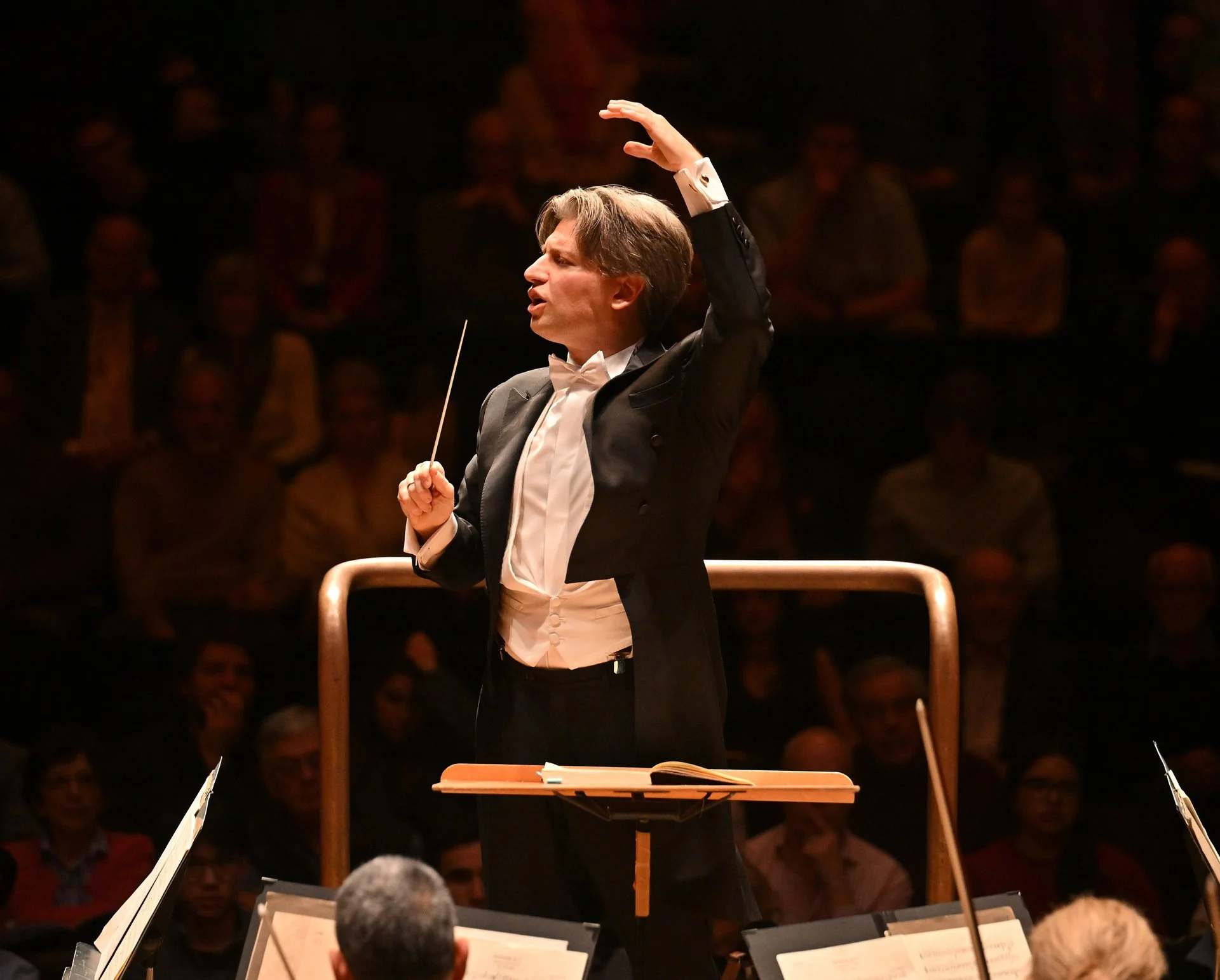
Photography by Barbican
Daniele Rustioni makes his debut at the Vienna State Opera with Bizet's "Les Pêcheurs de perles"
After stations at La Scala, the Royal Opera House, the Bavarian State Opera, the Opéra de Paris and the Metropolitan Opera, where he is currently Principal Guest Conductor, Daniele Rustioni is now making his debut at the Vienna State Opera with Bizet's Les Pêcheurs de perles. In this interview, he explains why he waited so long to do so, what makes this score so elusive and why its real challenge lies less in technical brilliance than in atmosphere, line, memory and the relationship between orchestra and voice.
You have conducted at many of the world's great opera houses. Why did you wait so long to make your debut at the Vienna State Opera?
Out of great respect, really. I say that quite openly. I often came to Vienna as an audience member, and perhaps that was part of the problem: in my mind, this house became a destination. A repertoire theater like this demands something very specific from a conductor. You have to know how to work with little rehearsal time and still achieve a very high level immediately. Earlier in my career, I didn't feel I was ready for that. Later, when I had gained this experience, I was also very busy with my years as music director in Lyon, which requires a lot of time if you want to do it properly, and with my work as principal guest conductor at the Bavarian State Opera. So in a way, it had to do with external circumstances, but also with the fact that Vienna has always been something very special for me: a house with an extraordinary history and, of course, this fabulous orchestra and choir. Even now, with all the experiences I've had elsewhere, it still feels like the ultimate challenge.
Why did Les Pêcheurs de perles seem to you to be the right work for this debut?
A lot of things came together. I have a long relationship with French opera, through Paris, Lyon and Aix-en-Provence, and the language and the libretto are very close to my heart. In addition, there was the extraordinary fact that Bizet's opera had never been performed at the Vienna State Opera before, which made the undertaking particularly appealing to me. In a way, it is unusual to debut in Vienna with a new production without having been tested in the repertoire beforehand. But perhaps that was precisely the reason why it appealed to me so much. In any case, I didn't want to come just to prove something. I wanted to come with a piece that demands a certain way of listening and a particular care in music-making.
You once described yourself as a "singer-conductor". What does that mean for you with a work like this?
It doesn't mean being a servant of the stage. It means that the relationship between orchestra and voice is very important to me. For me, the orchestra is not simply there to accompany more quietly while the singers take over the expression. The orchestra can play with the same intensity as the voice, but its sound has to be shaped in relation to …